Vitamins and minerals
Nutrition affects how muscle performs and how quickly it recovers. This page is general background for people in training, not a prescription.
Before you take anything
Talk to your doctor or pharmacist before starting a supplement, particularly if you take prescribed medication, are pregnant, or have a heart, liver or kidney condition. Some supplements interact with medicines — vitamin E, for example, has a blood-thinning effect and matters a great deal if you are on anticoagulants. I am not a doctor or a dietitian, and nothing here is a treatment plan for a medical condition.
Vitamins
Vitamins form part of the enzymes that regulate the chemical reactions in your body, and they are needed in small amounts for normal growth and for maintaining life. Your body cannot manufacture them, so it has to get them from food and, where necessary, from supplements.
Some athletes reason that if a supplement keeps them healthy, a massive dose will make them super healthy. It does not work that way. The excess is usually rejected, most often in the urine, and sometimes as a reaction such as skin irritation. Medical opinion is that large doses of vitamin supplements do not improve performance, and I agree with that. Vitamins are not a source of energy.
What is true is that a genuine deficiency will affect an athlete's performance in any sport. These are the two that come up most often.
Vitamin C
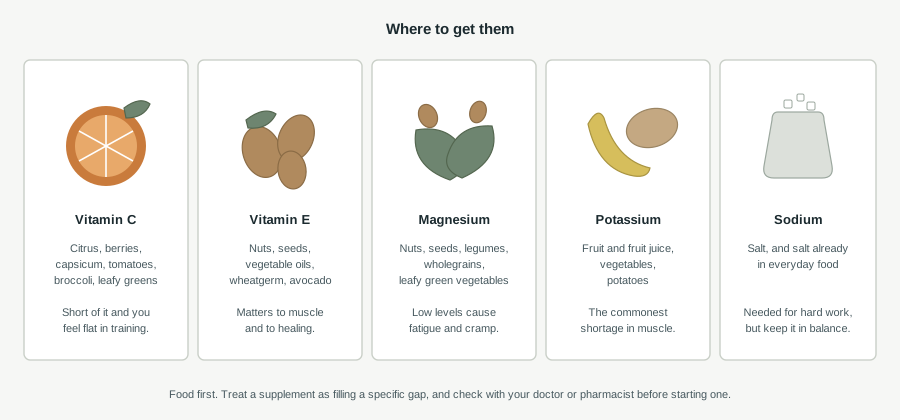
Best obtained by eating plenty of vegetables and fruit as part of your training diet. How much is enough is something dietitians disagree about, so be guided by your own body. A shortage of vitamin C tends to show as fatigue and listlessness when you are exercising and training hard. If that is what you are feeling, it is worth looking at your intake. I would not rate it as the most important thing your body needs, but a deficiency will hold you back.
Vitamin E
Vitamin E prevents the oxidation of polyunsaturated fats in the body. Without an adequate supply, those fats oxidise and by-products accumulate as a pigment in the tissues.
It matters for muscular health, and the heart is a muscle. It helps the body use fat, it is concentrated in the pituitary, adrenal and sex glands, and it protects vitamin A, linoleic acid and other nutrients from being destroyed by oxygen in the body. Ordinary diets tend to be low in it.
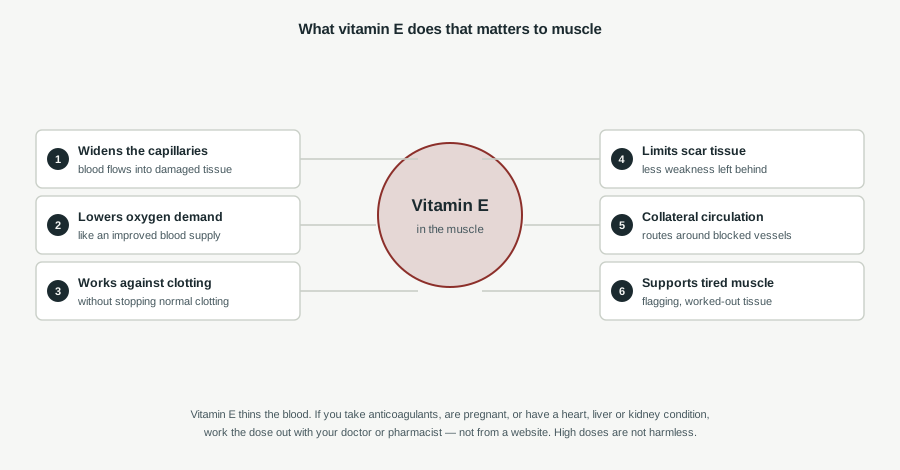
The properties that make it relevant to muscle work are these:
- It acts as a vasodilator, widening the capillaries so blood flows more freely into damaged or anaemic muscle tissue, which strengthens both the tissue and the nerves supplying it.
- It reduces the oxygen demand of muscle tissue, which has an effect similar to improving the blood supply.
- It has an antithrombin action, working against the formation of clots without interfering with normal clotting.
- It works against the formation of excessive scar tissue.
- It increases collateral circulation, encouraging blood to find routes around blocked veins and arteries.
- It supports tired, flagging muscle.
In my experience it is helpful in the healing of muscle injuries. If you are considering supplementing it, work out the dose with your doctor or pharmacist rather than from a website — the right amount depends on your diet, your age and what else you are taking, and high doses are not harmless.
Minerals

Minerals are basic elements found in soil. Plants take them up from the soil, and when we eat those plants, or the meat of animals that ate them, the minerals are absorbed into our own tissues. Each one has specific jobs in the body.
Magnesium
Regulates muscle contraction and the conversion of carbohydrate into energy. Low magnesium levels in the muscle cells can cause fatigue and cramping, and anyone who suffers regularly from cramps should look at their magnesium intake first. Magnesium is lost through sweat, and athletes sweat a great deal in hard training. Good food sources are nuts, seeds, legumes, wholegrains and leafy green vegetables.
Potassium
Potassium is the most important mineral inside the muscle cell, and a shortage of it is the most common deficiency affecting muscle. People who feel weak and tired for extended periods are often short of it.
Every muscle being exercised produces heat. To prevent overheating, muscles release potassium into the bloodstream, which widens the blood vessels and increases blood flow so heat is carried away. It is lost through sweat and urine, so it needs regular replacement. There is no built-in warning system to tell you that you are running low, so you have to go on the symptoms. Fruit, fruit juice, vegetables and potatoes are all good sources, and juice has the advantage of carrying glucose as well.
Sodium
Sodium is the most abundant mineral in the bloodstream, and anyone doing hard physical work needs it. Run low, particularly in heat, and you risk dehydration and cramp. The balance matters in both directions, though: a consistently high salt intake is linked to raised blood pressure and to cardiovascular risk. If you have been told to watch your salt, follow that advice and manage heavy sweating with your doctor.
The short version
Eat properly, replace what you sweat out, and treat supplements as filling a specific gap rather than as a performance aid. If you think you have a deficiency, a blood test through your GP will tell you far more than guesswork will.
See also what helps an injury heal faster, or the vitamins and minerals I stock.
Book a treatment
Endeavour Hills, Victoria. Phone is the quickest way to reach me; otherwise send a message and I will get back to you.