Horse muscle therapy
Equine physical therapy is non-invasive treatment and rehabilitation of injuries in animals. The goals are the same as they are for people: relieve pain and swelling, restore function, and rebuild strength in the injured part.
The profession is still young, and its value is not universally accepted by the veterinary community. That scepticism is fair, because the potential for harm from untrained people using untested techniques is real. My view is that soft tissue work is not really an alternative therapy at all; it is a normal part of equine practice that is poorly understood and underdeveloped, largely for want of an orderly system of training.
Be clear about what it will and will not do. Some conditions, laminitis among them, will not be cured, though the horse should get considerable relief from discomfort early in treatment. Tendon injuries in the lower limb heal slowly. Therapy can settle the early heat, swelling and pain and give the appearance of full recovery well before the tendon fibres have matured and regained tensile strength. A horse put back to work on that appearance, without proper diagnostics, can re-injure the tendon.
Working with your vet
Muscle therapy sits alongside veterinary care, not in place of it. Lameness, suspected fractures, colic, wounds needing closure, and any injury that is not resolving all need your vet. Ask any therapist about their qualifications before they touch your horse.
Pain, spasm and why it matters to performance
Muscle is the largest mass of soft tissue in the horse's body, and the role of sore muscle in poor performance is easy to overlook. Muscle pain is physical stress. It drains physical energy, because the body sets up protective mechanisms such as sustained contraction to guard the injured area, and the metabolic cost of holding that tension is real. It also drains mental energy through constant feedback from the pain site.
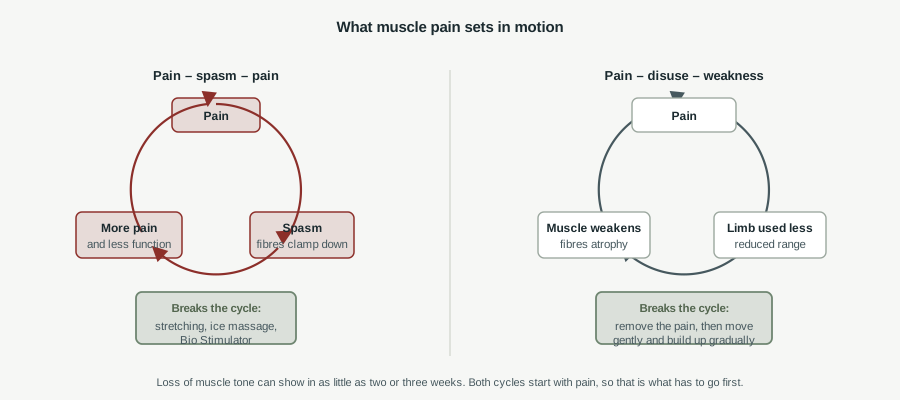
Pain sets up a reflex known as the pain-spasm-pain cycle. Spasm is intense involuntary contraction of the muscle fibres, more severe than ordinary muscle tension and not relieved by rest. It has to be broken. A muscle in spasm feels hard and hyper-reactive rather than soft and vibrant, and has reduced agility and strength. Left to persist, it causes marked loss of function.
Stretching, ice massage and electrical stimulation with a Bio Stimulator unit are what break into that cycle and let the fibres relax and start contracting normally again.
There is a second cycle worth knowing about. When the brain gets a pain message it inhibits use of the limb, which is nature's way of protecting it. But reduced force and reduced range of movement lead to weakness and stiffness, and if that persists the fibres atrophy and lose contractile power. Loss of muscle tone can appear in as little as two or three weeks, and it all started with muscle pain.
When therapy is needed
Often as prevention, to avoid the muscle contraction and soft tissue shortening that comes with physical training. Stretching should be routine in the warm-up, to avoid imbalance in range and motion between opposing limbs or muscle groups.
When muscles are tense or in spasm, strengthening exercise makes them worse. Stimulating them is the answer. Stretches taught to the owner are of great benefit to a horse in muscle pain, and should be done after a warm-up when the tissue is ready.
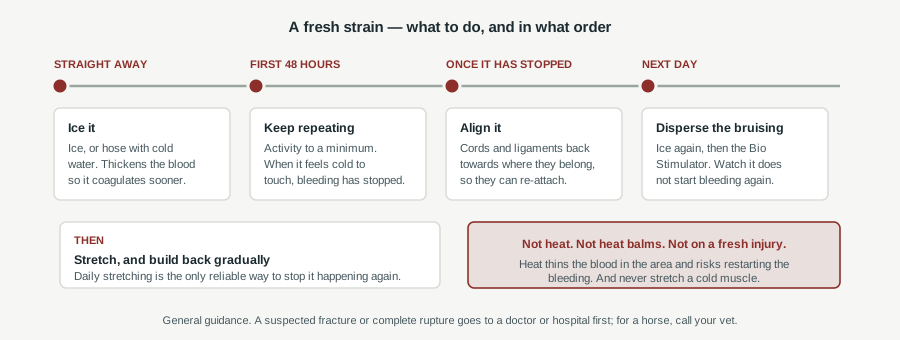
Do not stretch cold muscles. Avoid heat and heat balms on a fresh injury.
Aches, pains and sprains
Six internal tissue structures account for most painful injuries: muscles, tendons, bones, joints and cartilages, ligaments and fascia. Skin is the seventh and the only one that is visible. As a rough guide, if it hurts to move the elbow, shoulder, hip, knee or fetlock, it is likely a joint, ligament or cartilage problem; if it is sore to touch, the damage is more likely in muscle, ligament, tendon or fascia.
Muscle soreness
Usually sets in twelve to twenty-four hours after work the horse is not accustomed to. If the discomfort is localised there may be an injury; but not all soreness is injury, and much of it is swelling of muscle fibres that have been stretched with each contraction. Rubbing in hot liniments will mask it briefly and does nothing for healing.
Pulled muscles
An acute tear of the fibres or cords in a muscle, or where the muscle attaches to bone, tendon or ligament. It shows as sudden, persistent pain in a muscle under load, and it happens when more tension is exerted on one muscle than on the opposing ones. Continuing to train only prolongs it. What makes a horse more susceptible:
- Insufficient warm-up. Stiff, tight muscle injures easily. Warm up with slow easy movement, building tempo gradually.
- Poor flexibility. Hard work slightly damages muscle; as it heals it shortens and tightens, and tears easily if not stretched.
- Muscle imbalance. Do not train a muscle so it overpowers its opposing one.
- Mineral deficiency. Sodium, potassium, phosphorus, calcium and magnesium all affect muscle composition.
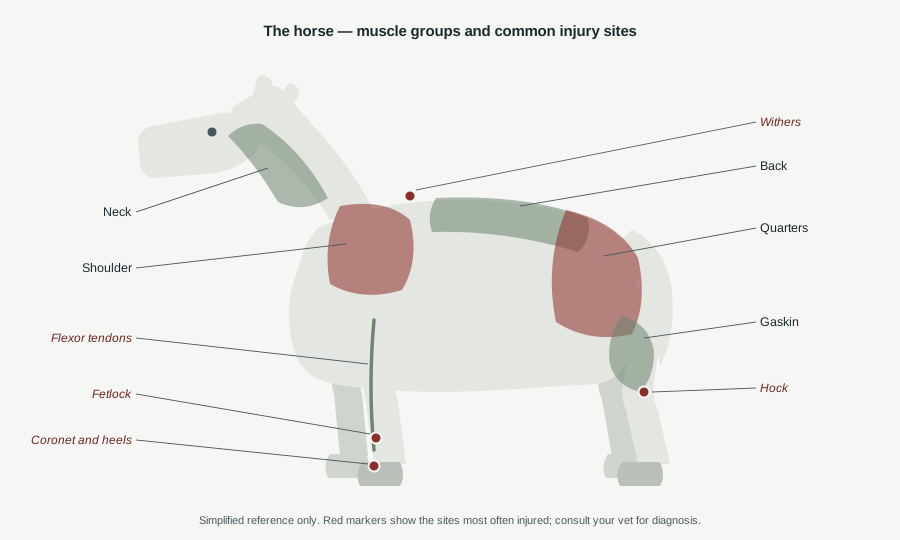
- Poor training methods. Workload should increase gradually. Far too much road work far too soon is the commonest fault I see, and the injuries it causes to feet, flexor tendons, knees, groins and backs are avoidable.
Ice, heat and bruising
Many trainers and owners are told to apply heat within forty-eight hours of a pull or strain, on the reasoning that heat dilates blood vessels and brings nutrients to the area. My view is different. Heat applied around a fresh injury thins the blood there and increases the chance of rupturing more vessels or restarting the bleeding.
Apply ice immediately, or hose with cold water, and repeat over the next 48 hours, keeping activity to a minimum. Ice thickens the blood and lets it coagulate sooner; when the area is properly iced and feels cold to touch, you can take it that the bleeding has stopped. Once it has, align the cords and ligaments as near as possible to their correct positions and work on dispersing the bruising.
A Bio Stimulator unit, also known as a TENS machine, is an accepted form of physical therapy that passes a low-voltage current through the muscle via two pads placed at opposite ends. The impulses make the muscle contract and expand at a set frequency, which stretches the muscle and ligament and helps disperse congealed blood from the haemorrhage. It is useful for bruising, muscle soreness and open wounds, and it should be standard equipment for anyone treating injuries.
Hamstrings
Very susceptible, and typically only 50 to 60 per cent as strong as the opposing quadriceps group. Strains happen more often where there is a deficiency in the reciprocal action of opposing muscle groups, usually from uneven muscle strength or incorrect toning.
A fit horse is toned in coordination as well as strength, and when it sprints all the muscles involved act in unison. If one group reacts a fraction slower, the stronger ones carry the extra load and that is what tears them. The tear occurs where tension is greatest, pulling the fibrous tissues and cords away from bone or tendon, and because the muscle is so strong the tear can grow with any sharp movement.
You can feel where a hamstring is torn, and lining it up is a straightforward manipulation. Strains healed by other methods tend to recur because scar tissue builds inside the muscle and creates a weak point. Faster healing means less scar tissue and less recurrence.
Over-reach
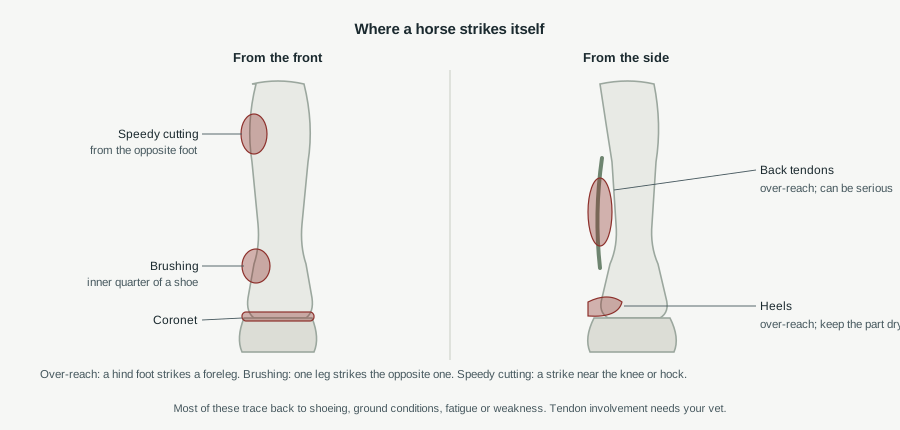
A wound or bruise caused by a hind shoe or hoof striking a foreleg, usually from the inner edge of the toe of the hind shoe, which tends to make a flap. The seat of injury is usually the soft horn just above the heels, the coronet just in front of the heel, or the back of the tendons.
It happens because the injured foreleg was not lifted off the ground in time to make way for the hind leg following it, typically from soft, irregular or slippery ground, from weakness, or from incorrect shoeing. Prevention is about shoeing and about teaching the horse to carry more weight on the quarters so it lifts the forelegs out of the way, through reining back, circling and changing legs.
Where the tendons themselves are involved rather than just the skin, the horse's usefulness can be permanently affected, and that is a veterinary matter.
Brushing and speedy cutting
Brushing is the outer edge of the inner quarter of a shoe, or rough nail clenches, wounding the opposite leg, generally at the fetlock. Where it is caused by the horse turning its toes out, lowering the wall of the outside portion of the foot that gets hit usually moves the fetlock out of the line of the offending foot, and I have found that better than thickening the inside half of the shoe. Do not thin the wall of the foot that inflicts the wound; it needs to bear weight.
Speedy cutting is when a horse wounds the inside of a leg near the knee or hock with another foot, usually at the gallop or when moving about restlessly, and it is more common in well-bred horses with free action and in horses that turn their toes out. It is not just disfiguring; it is dangerous to the rider, particularly over jumps. Boots should come high up the side of the knee, in stout leather lined with something soft. Good breaking and capable riding that keeps the horse collected does a lot to check the tendency.
Behaviour and pain
When I am called to a problem horse, some of the problem is usually a misreading of why the horse is behaving that way. We tend to attribute human needs and characteristics to horses, which leads to poor assessment of what the animal actually needs and creates unnecessary stress.
Undesirable behaviour often starts with pain and is then made worse by misunderstanding. Once the pain is genuinely gone, horses abandon the resistance faster than you would expect, and the speed of that change tracks how complete the pain relief was. Before concluding that a horse has a behavioural problem, check it over for injury, pain or discomfort.
Book a treatment
Endeavour Hills, Victoria. Phone is the quickest way to reach me; otherwise send a message and I will get back to you.