What is muscle manipulative therapy?
Muscle manipulation is the alignment of muscles, ligaments, tendons, cartilages, blood vessels, nerves and fibrous tissues that have been pulled out of position by injury. Once they are back in place, the body can heal the area properly.
When tissue is left misaligned, pain persists. In some cases calcium forms around the injured area, which makes later manipulation harder. A practitioner works by feel to locate the injured tissue, then uses their fingers, a Bio Stimulator unit, or both, to bring it back into alignment. Relief can come very quickly, sometimes within minutes of a manipulation.
The work depends on a sensitive feel. You have to know what you are feeling for, and once you have found it, you have to know where the muscle, ligament, tendon, cartilage, blood vessel, nerve or cord belongs. It gives people who have carried injuries for years an option worth trying before more invasive routes. See the injuries and conditions I treat.
Scope of practice
This is manual soft tissue therapy and general education. It is not a diagnosis and not a substitute for medical care. Suspected fractures, complete ruptures, dislocations, head injuries, and any injury involving numbness or loss of power in a limb need assessment by a doctor first.
Hatchard's Way
Bill Hatchard called his method Hatchard's Way, and that is the name it is still known by among the people he taught. It is not a brand so much as a way of working: find the injured tissue by feel, put it back where it belongs, and let the body do the healing. Everything below is the anatomy that method rests on.
How muscles work
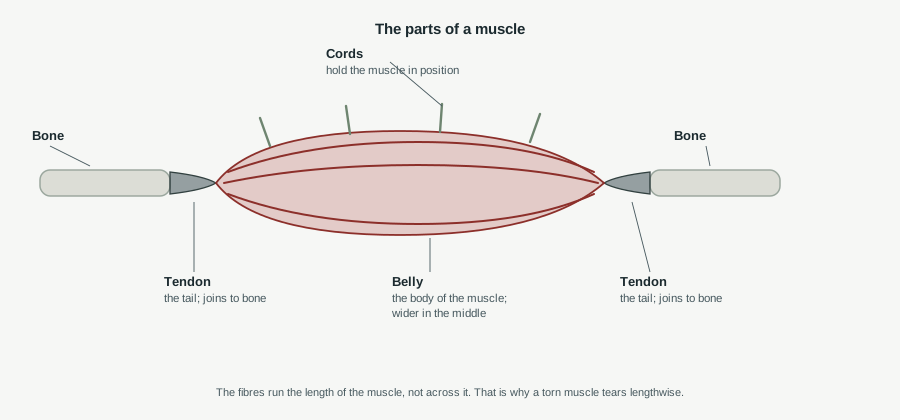
The word muscle comes from the Latin for mouse. A muscle has a body, which is the muscle itself, and a tail, which is the tendon. The tendon acts as an extension of the muscle and usually attaches to a bone to help raise and lower a limb.
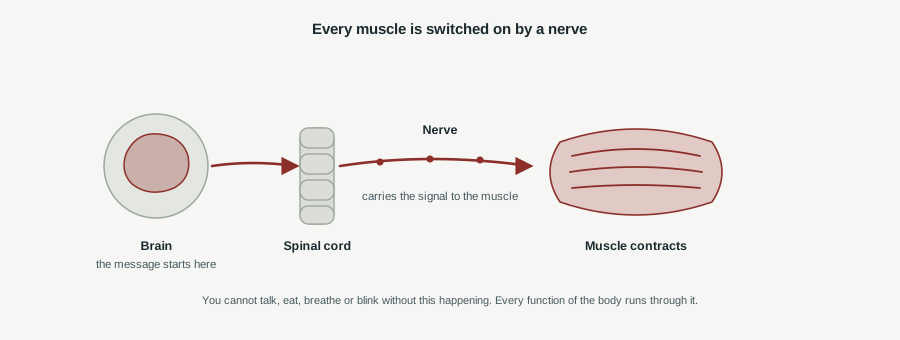
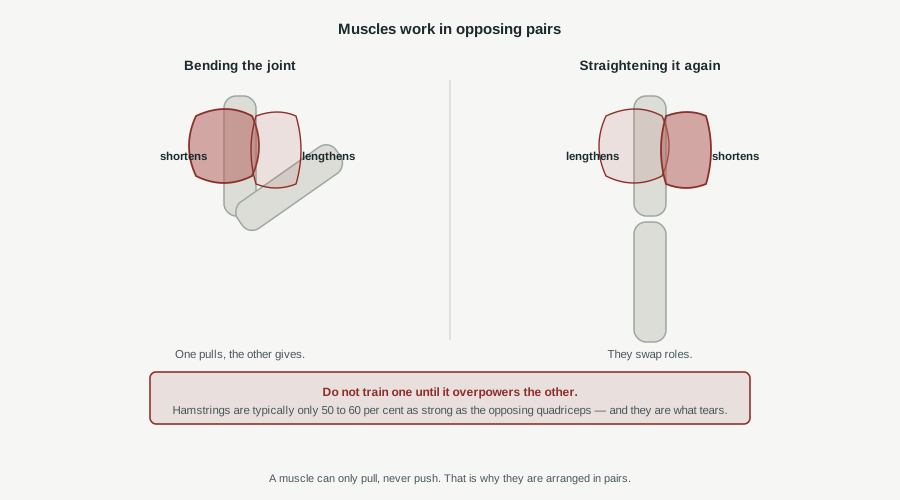
Muscles are small motors that move every part of the body. You cannot talk, eat, breathe or blink without using one. They all produce movement the same way: when they shorten or contract, they pull on their tendons or their attachments to bone, and those bones move. Each muscle is activated by a nerve carrying messages from the brain.

Muscle fuels

- Protein is never a source of immediate energy and is a poor substitute during exercise. It is a building block for tissue, and the body has no way to store extra.
- Fat is a secondary source of energy, particularly in the later stages of a long effort. It is stored in the muscles, under the skin and around the inner organs.
- Carbohydrate is the primary fuel for exercise, stored in the muscles and liver as glycogen. Glycogen and fat are the main fuels muscles burn.
Burning those fuels efficiently takes oxygen, delivered through the bloodstream by red blood cells. This is why muscle toning matters so much. Toned muscles have larger blood vessels, more blood flows through them, and more oxygen reaches the muscle to burn glycogen and fat.
Training properly improves oxygen utilisation on both sides of that equation: the heart pumps a greater volume of blood per beat, arteries and blood vessels enlarge, red blood cell count rises, and the enzymes in your muscles get better at picking oxygen out of the bloodstream.
What limits muscular endurance
- Loss of muscle glycogen, the primary fuel
- Loss of fat reserves, the secondary fuel
- Low blood sugar
- Lack of oxygen
- Heat build-up in the muscles
- Accumulation of lactic acid
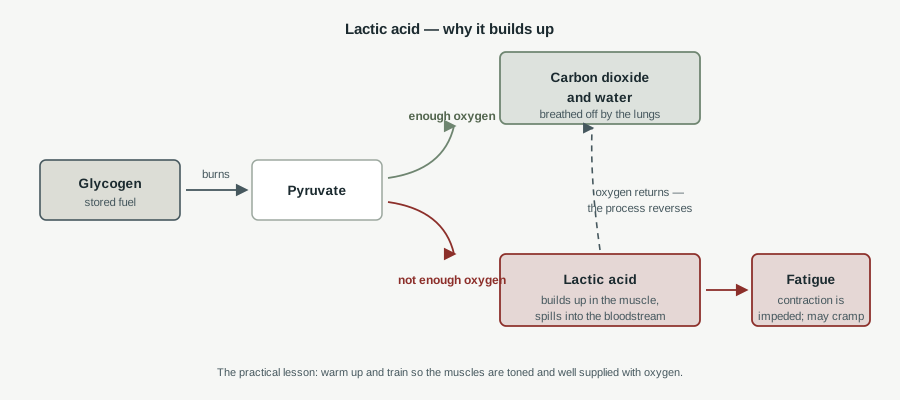
When glycogen is burned it breaks down into pyruvate. With enough oxygen available, pyruvate converts to carbon dioxide and water, which are breathed off by the lungs. Without enough oxygen, it converts to lactic acid instead, which builds up in the muscle and spills into the bloodstream.
Lactic acid impedes muscle contraction and makes movement progressively harder, which is felt as fatigue. At high levels the muscle stops contracting altogether: control goes, and it becomes very painful and may cramp. As soon as oxygen is available again the process reverses and the athlete gets a second wind. The practical lesson is to train and warm up properly so the muscles are toned and well supplied with oxygen.
Ligaments
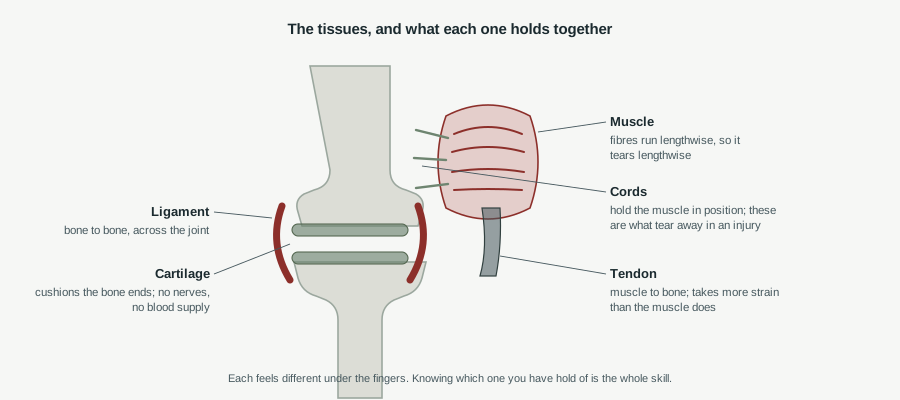
A ligament is a tough fibrous band attached near the ends of bones where they meet to form a joint. Its main job is to hold those bones together as the joint moves. Some hold so tightly there is very little movement at all; others are flexible enough for the wide range of the elbow, wrist, shoulder, hip, knee and ankle. The vertebral ligaments holding the spine together have a very limited range.
In this therapy ligaments matter enormously, because they hold bones together and keep muscles in their correct position. Ligaments are fixed at both ends, to bone or to muscle, and they have fibrous cords that tear away easily from either. Those tears are what we call sprains, and they always bleed. The work is to put those cords and ligaments back as close as possible to correct alignment. In most cases they re-attach where they were torn from, laying down new cells that close the tear with little scar tissue.
Ligaments can stretch and stay stretched for want of manipulation. This is common after childbirth where the muscles and ligaments of the groin, stomach and lower back are not properly rehabilitated, and the result is ongoing lower back pain and sciatic irritation. Much of that is avoidable with the right treatment and exercise.
Tendons
Tendons are strong fibrous bands attached to muscle at one end and bone at the other. They are very strong and differ noticeably from ligaments in size, shape and feel; with practice you can trace where a tendon continues on from a muscle and attaches to bone.
When a muscle contracts it draws its tendon up, and the bone with it. The calf muscles contracting draw up the Achilles tendon, which runs from the bottom of the calf down the back of the leg to the heel, and that is what pulls the foot down. The same action bends knees, elbows, fingers and toes.
Tendons have a smaller cross-section than muscles, so force is concentrated over less area and they take more strain during exercise. They are also poorly protected, and can rub against bone, ligament and other tendons as they move. They tend to separate from bone or muscle, and occasionally tear right through, usually from a violent muscular contraction. Ruptures are common in sprinting and football, and most common in athletes with tight, inflexible or under-conditioned muscles.
You can usually hear a rupture. There is a loud pop, and the pain is severe enough that the person will not let the limb be examined.
Suspected rupture: go to hospital
If a rupture is suspected, go to hospital so the extent of it can be verified. A complete rupture needs to be stitched back together. A piece of bone torn away with the tendon needs surgery. Manual therapy has a role afterwards, not instead.
Where it is a separation rather than a complete tear, there is internal bleeding at the site that needs to be dispersed as quickly as possible so the cords in surrounding tissue can re-attach to the tendon or bone. Aligning those cords speeds recovery, and within a few days gentle stretching should begin. Daily stretching is the only reliable way to stop it happening again. In running sports the Achilles takes the most force and is pulled or ruptured far more often than any other tendon.
Cartilages
Cartilages are tough white gristle lining the ends of bones in a joint, protecting them from rubbing together and cushioning shock. They contain no blood vessels or nerves, are fairly brittle, and can be torn or chipped by the stress placed on them. Once damaged, bone can rub on bone, and because the ends of unprotected bones carry a rich nerve supply, every movement hurts. Pressure on nerves is the most common source of pain in the body.
The cartilages most prone to injury are in the knee joint and the spinal column, where they are called discs. Keep the muscles and ligaments around the knee toned and exercised, and do the same for the back, which is what holds the spinal column in position.
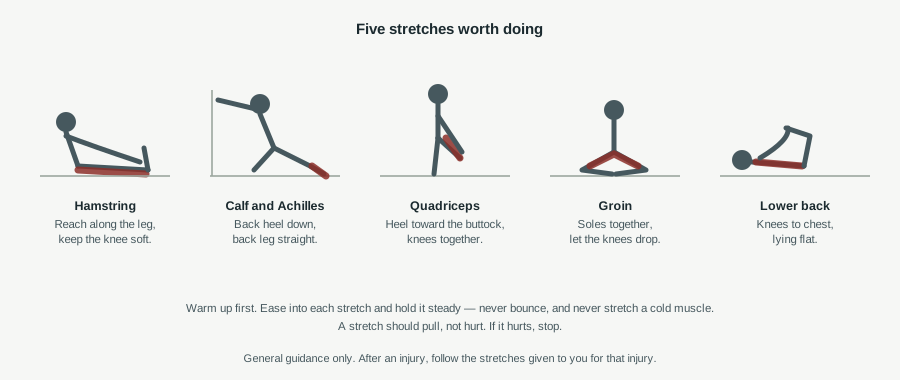
Lack of flexibility is the main source of muscle and ligament strain. Stretching is the single most important thing you can do to prevent injury, and mineral levels matter too — cramping often traces back to magnesium.
The Bio Stimulator
One device sits alongside the hands-on work. It does not replace it, and it is not the reason the treatment works — the manipulation is.
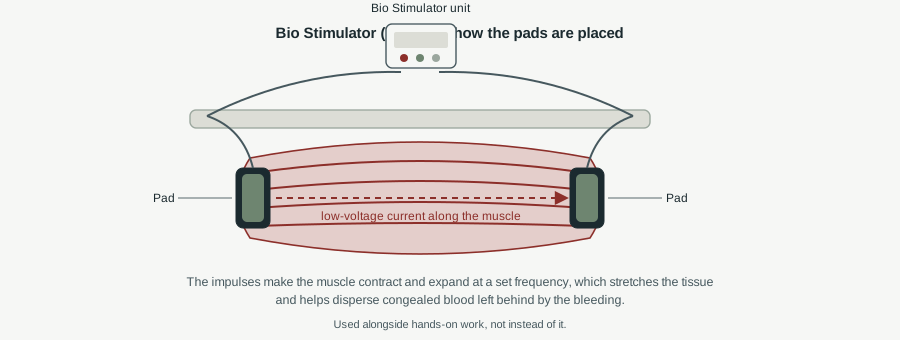
A low-voltage current passed through the muscle between two pads placed at opposite ends of it. The impulses make the muscle contract and expand at a set frequency, which stretches the tissue and helps disperse congealed blood left behind by bleeding into the injury. TENS is a long-established and widely used form of physical therapy.
Working by feel
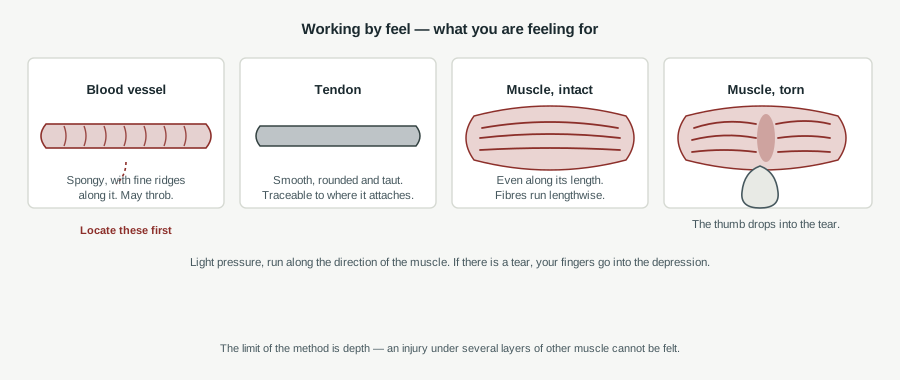
Everything above comes down to feel. Blood vessels are the one structure I treat as genuinely risky, because they do not stretch as much as the others and are more prone to rupture. A blood vessel feels spongy, with tiny concertina ridges along its length, more obvious in the larger ones. Sometimes a throb can be felt. Before feeling for ligaments I probe the area first to locate the blood vessels, because they are not always where the anatomy book says.
Tendons are large, very smooth and usually taut. Press your fingers on a muscle and move down, and you can feel where the tendon starts and trace it to its end. They vary enormously: wide and flat like the Achilles, or round and long, some as thick as a little finger and some like a piece of thread, from a fraction of an inch to over 300 mm.
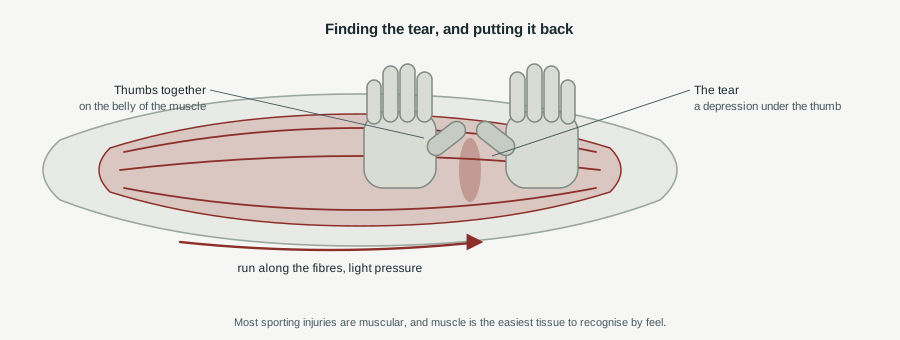
Muscles are the easiest to recognise, which matters because most sporting injuries are muscular. Nearly all of them cross over or under other muscles, so knowing their shapes is what separates a strain from a tear. Most are shaped like a deflated football bladder, thinner at the ends and wider in the middle, made of fibres that run the length of the muscle rather than across it. That is why they tear lengthwise.
The thigh muscles are the classic example. The rectus femoris looks like a butterfly fillet of fish, in two distinct parts you can feel clearly, and you can feel where it usually tears. Once you know the direction of a muscle, running a thumb along it with very light pressure will drop into the depression of a tear. The limit of the method is depth: an injury to a muscle covered by several layers of other muscle cannot be felt.
Book a treatment
Endeavour Hills, Victoria. Phone is the quickest way to reach me; otherwise send a message and I will get back to you.